Yuta Kiami
Engineering • Physics • Computation
About Me
I'm a third-year student at UCLA studying Physics and Bioengineering, working at the intersection of computational methods, engineering design, and the natural sciences. I enjoy learning and thinking at the scientific level while applying my knowledge and skills to solve real-world problems, whether that's better understanding the physics of antimicrobial peptides with ML, or restoring music playing for those who have lost hand mobility. Looking forward, I hope to grow my technical experience through industry roles with teams building something new. Outside the lab, I play cello, enjoy cooking, and spend as much time as I can skiing or outdoors.
Projects
SSVEP Brain-Computer Interface Piano Player
BCI
EEG
FBTRCA
Python
Signal Processing
UI/UX
Real-Time Classification
- Built a brain-computer interface system allowing users to play piano notes hands-free by gazing at flickering visual stimuli (SSVEP).
- Developed an integrated UI combining an EEG data collection interface and a live classification display, enabling seamless transitions between training and performance modes.
- Implemented and trained Filter Bank Task-Related Component Analysis (FBTRCA), a state-of-the-art SSVEP decoding algorithm, achieving robust multi-class frequency discrimination.
- Mapped decoded SSVEP frequencies to piano notes, triggering audio playback with EMG to create a fully functional BCI musical instrument.
- Iterated filter bank parameters and epoch lengths to maximize accuracy.
Epistasis in Plasmid Horizontal Gene Transfer
Evolutionary Biology
NK Landscapes
Gillespie Algorithm
Monte Carlo
Python
Stochastic Simulation
Epistasis
Numba
NumPy
Pandas
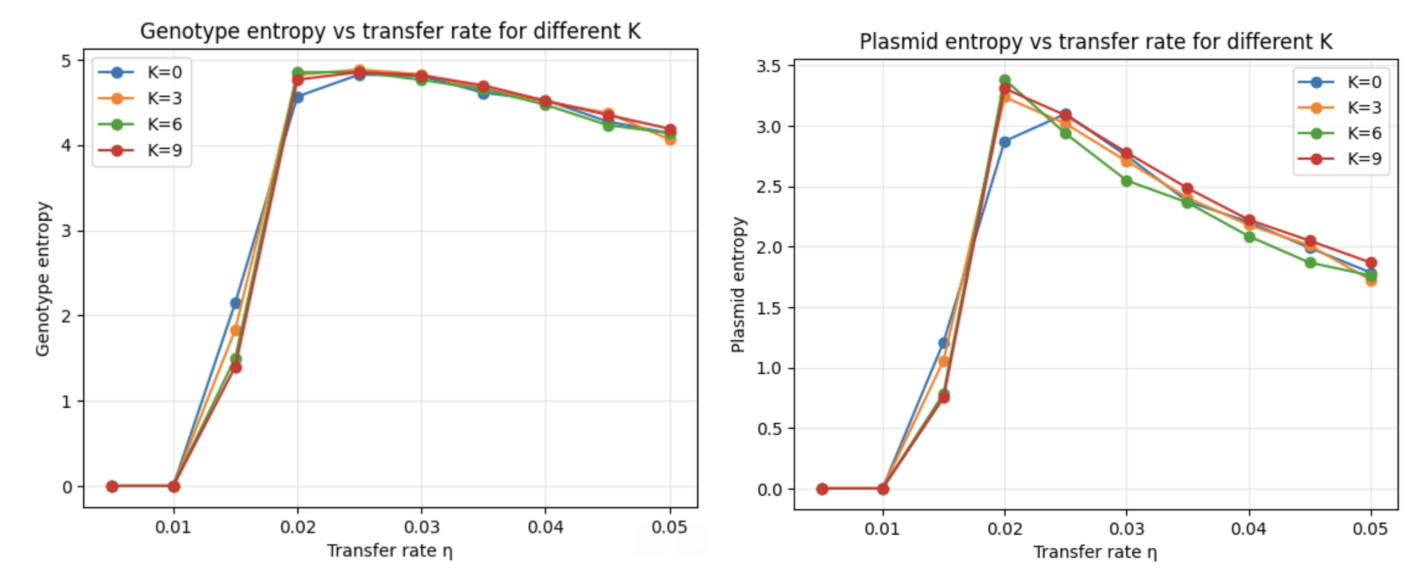
- Investigating how epistasis, non-additive interactions between plasmids, shapes the dynamics of horizontal gene transfer (HGT) via plasmids in bacterial populations.
- Modeling fitness landscapes using the NK framework, tuning the epistasis parameter K to produce landscapes ranging from smooth and additive to highly rugged and multipeaked.
- Simulating population-level evolutionary dynamics using the Gillespie and Monte Carlo algorithms for stochastic kinetics, capturing birth, death, mutation, and plasmid transfer events at the individual level.
- Systematically iterating over landscape ruggedness, transfer rate, and population size parameters to map out how HGT interacts with epistatic structure to facilitate or impede adaptation.
- Probing whether plasmid-mediated gene transfer acts as an escape mechanism from local fitness peaks on rugged landscapes, and under what epistatic regimes HGT is most evolutionarily advantageous.
TruBalance Stand
Constraint-Driven Design
Jupyter
SolidWorks
Prototyping
3D Printing
- Creating a rigid tablet stand defined by a curve that rests at static equilibrium for any angle at which the stand can be placed.
- Considered physical and geometrical constraints to work out an initial design concept, reducing to only two constraint equations.
- Used Jupyter to numerically solve for constrained parameters, allowing for easy material and dimensional customizability.
- Modeled the design in SolidWorks to allow prototyping.
- Currently creating prototypes using 3D printing, making practical and design improvements with each iteration.
Peptide Curvature VAE Pipeline
VAE
KNN
Julia
Bash
Dimensionality Reduction
Bioinformatics
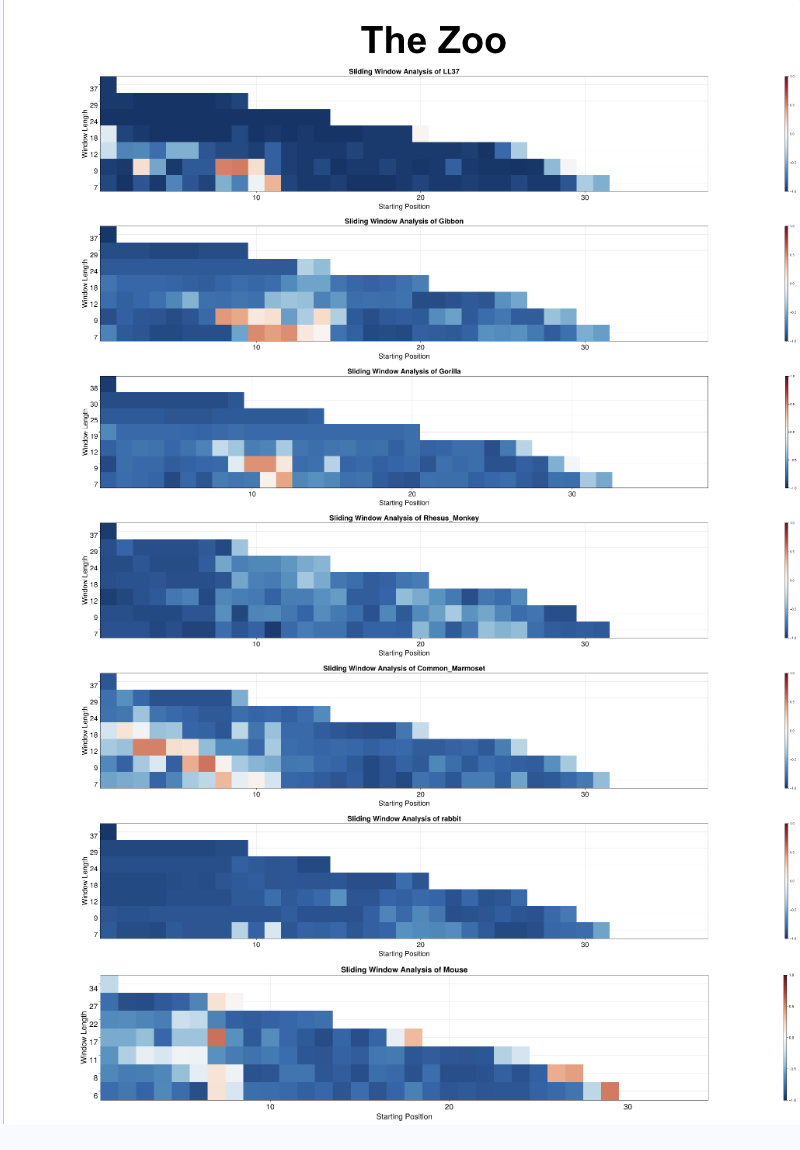
- Automated a pipeline to splice peptide sequences into overlapping segments of varying lengths, enabling sub-sequence level analysis of membrane curvature affinity.
- Passed spliced segments through a Variational Autoencoder (VAE) to produce low-dimensional embeddings encoding the physical and biochemical properties of each peptide fragment.
- Applied a K-Nearest Neighbors classifier in the VAE latent space to assign each segment a negative Gaussian curvature (NGC) or positive Gaussian curvature (PGC) affinity score based on proximity to labeled reference peptides.
- Visualized classification results across peptide length to provide interpretable, position-resolved curvature profiles for downstream analysis.
- Automated the full workflow end-to-end using Julia and Bash scripting, enabling rapid throughput across large peptide libraries.
Flagellum Image Classification
CNN
Julia
Pluto
Image Processing
Bash
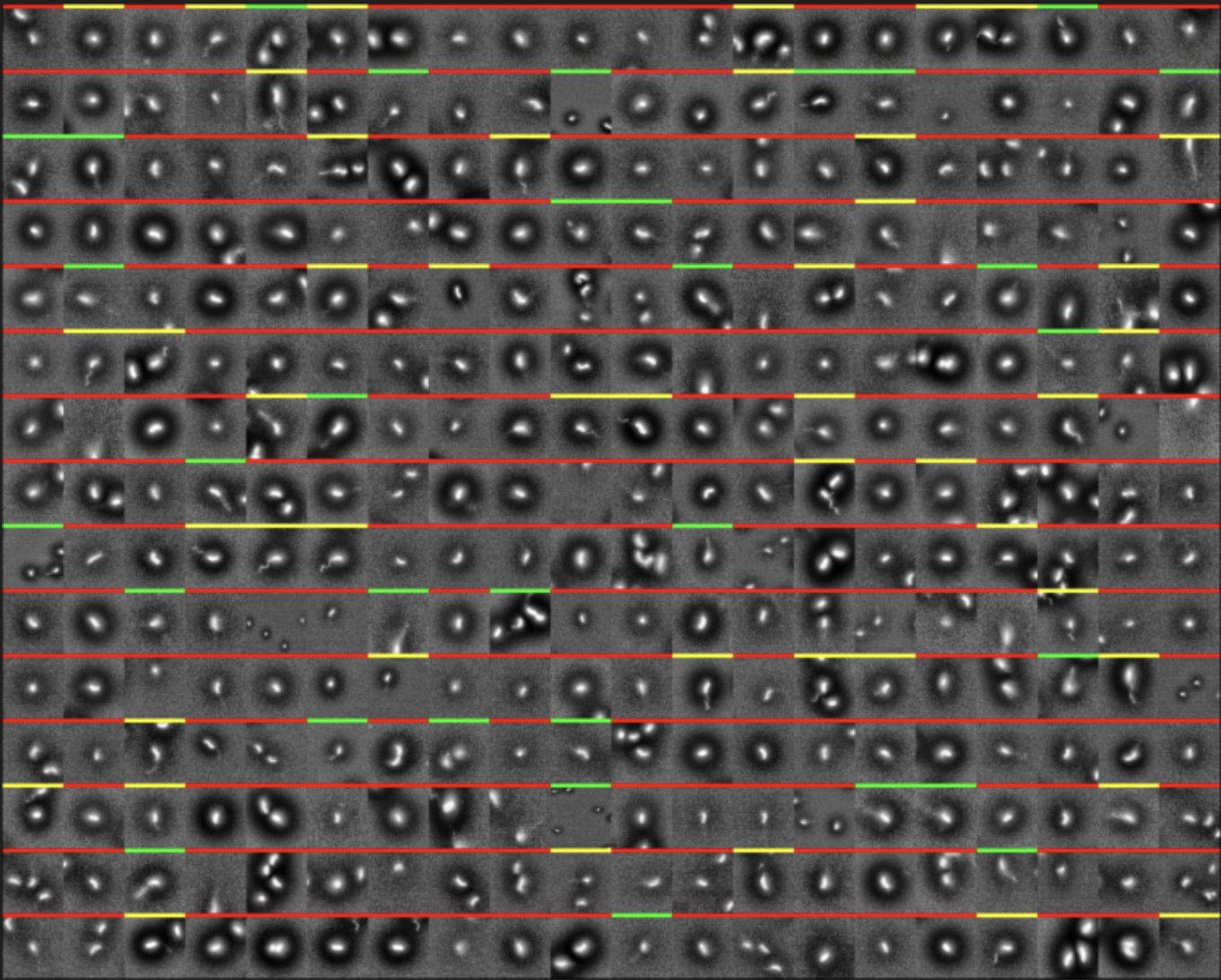
- Built a deep learning pipeline to classify 10,000+ bacterial images with high throughput and reproducibility.
- Designed a streamlined interface for manual labeling, enabling 600+ images/hour for training data generation.
- Tuned model architectures to boost accuracy and training efficiency, achieving 50%+ accuracy improvements.
- Experimented with diverse datasets and processing, boosting model accuracy by 30%.
EEG Seizure Detection
DWT
Jupyter
SciPy
SVM
PCA
- Used machine learning methods to create software that automatically classifies EEG as seizure/non-seizure.
- Processed the signals two ways: one using DWT (discrete wavelet transform) and the other using PCA.
- Used SVM to classify EEG signals, achieving 96% accuracy, 90% precision, and 90% recall.
TCR-β Design Pipeline
Jupyter
Bash
AlphaFold
OmegaFold
ESMFold
Pandas
NumPy
Matplotlib
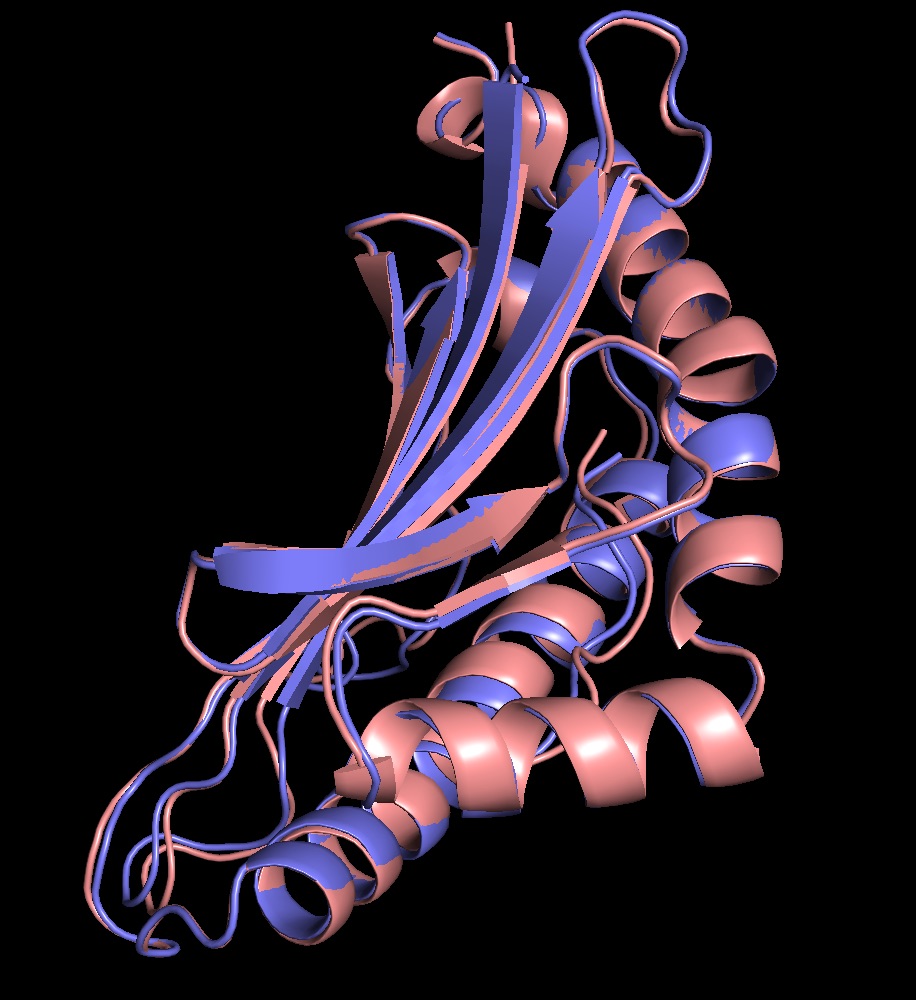
- Partnered with a startup and applied my method to design a linker for a TCR-beta structure that could create drug delivery that is more specific, and navigates the body with greater efficiency.
- Developed a method to computationally design and evaluate 1300+ protein linkers for TCR complexes using AlphaFold, ESMFold, RoseTTAFold, and OmegaFold, facilitating in vitro testing.
- (Reach out for GitHub repository.)
Download Full Resume (PDF) →
Education
University of California, Los Angeles
June 2027
Physics B.A. & Bioengineering B.S.
Computer Science
Machine Learning
Transducers
Biomolecular Material Science
Mass Transport
Thermodynamics
Quantum Mechanics
Technical Skills
Languages
Python
C++
MATLAB
Julia
Bash
Python Libraries
NumPy
Pandas
SciPy
Numba
Matplotlib
Jupyter
PyLSL
Machine Learning
CNN
DNN
VAE
SVM
PCA
KNN
FBTRCA
Signal Processing
FFT
DWT
Filter Banks
Bandpass Filtering
Epoch Segmentation
Simulation
Monte Carlo
Gillespie Algorithm
Stochastic Simulation
Tools
SolidWorks
LSL
Lab Recorder
Professional Experience
Shenshen Wang Theoretical Research Group
Los Angeles, CA
Undergraduate Researcher
May 2025 – Present
Python
Numba JIT
NumPy
Pandas
Matplotlib
Monte Carlo
Gillespie Algorithm
NK Landscapes
Stochastic Simulation
- Independently designed a model of plasmid HGT on NK landscapes to quantify how epistasis drives persistence.
- Built a Python simulation pipeline and achieved 50x speedup via Numba JIT, enabling large-scale parameter sweeps.
- Complemented stochastic simulations with analytical derivations to cross-validate results and identify closed-form regimes.
- Translated findings into visualizations and presentations, partnering with wet-lab collaborators to test predictions.
Gerard Wong Laboratory
Los Angeles, CA
Undergraduate Researcher
May 2025 – Present
Python
Julia
Bash
Pluto
CNN
DNN
VAE
KNN
NumPy
SciPy
Image Processing
- Built a deep learning pipeline to classify 10,000+ bacterial data images with high throughput and accuracy.
- Designed a streamlined interface for manual data labeling, enabling 600+ images/hour for training data generation.
- Tuned model architectures and experimented with image processing methods, achieving a 43% improvement in accuracy.
- Designed and automated a data analysis and visualization pipeline for peptide fragments using Notebooks and Bash scripts.
UCLA Optofluidics Systems Laboratory
Los Angeles, CA
Undergraduate Researcher
Nov 2024 – June 2025
PDMS Fabrication
Laser Microfabrication
Acoustofluidics
Thermal Bonding
Degassing
Single-Cell Manipulation
Chip Prototyping
- Prototyped graphite-PDMS acoustofluidic chips for single-cell manipulation, allowing for efficient iteration of designs.
- Applied laser microfabrication and automation to produce 60+ microscopic air cavities per minute in graphite chips.
- Applied a complex fabrication process, including degassing, thermal bonding, and laser manufacturing.
Fred Hutch Cancer Center
Seattle, WA
Computational Research Intern
Jun 2024 – Sep 2024
Python
Bash
AlphaFold
RoseTTAFold
ESMFold
OmegaFold
Pandas
NumPy
Matplotlib
PyMOL
- Developed a computational pipeline to design and evaluate 1300+ protein linkers, integrating AlphaFold and RoseTTAFold.
- Partnered with a startup to apply my pipeline for a novel TCR-β drug delivery system to increase delivery efficiency by 23%.
- Organized and presented findings to collaborators, including Nobel laureate Dr. David Baker (Institute for Protein Design).
Leadership & Clubs
CruX UCLA
Los Angeles, CA
Educational Vice President
Mar 2026 – Present
EEG
SSVEP
FBTRCA
Signal Processing
Python
BCI
- Design a signal processing, machine learning, and neuroscience curriculum for new members as an introduction to BCI.
- Formulate a detailed project plan and provide continuous guidance for next year's neuroengineering competition team.
- Manage and guide a team of 4 technical coordinators in developing and presenting 20+ workshops and technical events.
Neuroengineering Competition Team Engineer
Oct 2025 – Apr 2026
SSVEP
EMG
FBTRCA
EEG
Signal Processing
Python
SciPy
NumPy
PyLSL
LSL
Lab Recorder
Real-Time Classification
BCI
- Designed an SSVEP+EMG neuro-piano for real-time playing, iterating prototypes to achieve 96% classification accuracy.
- Designed a full-stack pipeline including live signal processing, ML classification, and an intuitive GUI.
- Won first place at the California Neurotechnology Conference against other schools, including Berkeley, USC, and UCSD.
Technical Coordinator
Mar 2025 – Mar 2026
- Revamped 20+ technical workshops for new CruX members, increasing new member retention by 60%.
- Advised existing BCI teams and onboarded new teams across software, signal processing, and project workflow.
Samueli School of Engineering
Los Angeles, CA
Engineering Ambassador
May 2025 – Present
- Lead 5+ tours/quarter and present engineering programs to prospective students, providing insights and live Q&A.
- Support admissions and recruiting events as a representative of the engineering student body.